Tuesday, 22 November 2011

TYPOGRAPHY- Of movies in our genre

The examples of typigraphy below for different films will help us in deciding which would be most suitable for our own film title; the inspiration of them will help us in designing our own. In this we must consider colour, size and juxtapositioning and it must coordinate with our genre of homosexuality and possibly have connotations to make the title as meaningful as it can be.


This title connotes straight away as the colour of the title is that of a deep crimson representing passion and love. The fact that it is written in a font that looks like actual handwriting may suggest that the love that is within the film is genuine and real and self explanitary just as hand writing is; it's a form of identity and it makes it more personal as if someone has written an actual love letter which fits in with the genre of romance.


The way the words are written are in a very solid and bold font which could connote a sense of solidarity and meaningfulness in what has been written, as if it's almost a promise that has to be kept; "Remember Me". The slight fade in the words however can mirror how memories tend to be forgotten or not clearly remembered.
The red again connotes love and is a bold colour which makes it stand out even more against the white background.


The colours used in this title are that of a very mature colour scheme which reflects the age of the actors in the film which are of an older age. The font is very simple but creates and effect of effortlessness and how something simple can look so elegant even though it is a "traditional" font; this can be age related and suggest the same for older people and how they can still be stylish despite their age and the amount of fashion changes they have witnessed in their life times.


The words 'Dear John' have the colours of white and yellow have been used I think to reflect the gentleness of love and it makes the appearance of it much more softer to the eye which also reflects the softness of emotions. The block capitals makes it seem like it's an important address to someone, John, and because the sky is the background, it could reflect that this is in someone's thoughts.


The typography of this film is very unusual. Even though it's about love, the colours aren't the first you would pick to represent love. The black against white could be a binary opposition of good and evil: black and white. The black can be to represent elegance and power positively or in a negative sense, death and grief. The colour black has worse connotations than the colour white The white however has connotations of light, innocence, purity and cleanliness. Both can connote, however, enigmas and the unknown which is probably why they have been used simultaneously, to create a visual enigma.

POSTED BY SHAHNAZ

Sunday, 20 November 2011

STORYBOARD- Changed

Draft 2:


Following up on our previous storyboard we have since made a few changes that we feel with benefit and add substance to the plot, in terms of sticking closely to the genre.

Change 1:
Instead of the montage being very much based in a park location we have added a scene where the couple will be simply 'hanging out', possibly 'messing around' with a guitar. We think this will still show the playful nature of the couple and just how happy and comfortable they were before tragedy hit. (Shown above in the first mid shot)

Change 2:
After reviewing shot by shot our whole film opening,  we realised the transition between the 'happy, chirpy, love-birds' scene in the montage to the scene with the death of the guy, didnt really appear to make much sense and may not be claear, so we decided to add a short clip whereby the couple are having a heated argument which results in the guy storming out into the road and thats where he's hit. But just before, the girl attempts to call out to him, to save him.
This creates a clear enough reason why the girl feels guilty and has reoccuring dreams concerning the death of her boyfriend. We feel that our audience would quickly be able to put two and two together, that she blames herself.

POSTED BY TOSIN

SHOT LIST- Changed.

Shot List: (Changed)

- Close up- Jennie's face (showing her uncomfortable facial expression as she sleeps)
- Extreme close up x4/Zoom in (Into Girls eyelid)- Jennie's facial features
- Fade to white screen- Signifies entering Jennie's dream
- Mid shot/Close-ups/Pan/- Collection of a few clips of Jennie and boyfriend hanging out* (Montage)
- Mid shot/shot reverse shot- Jennie and boyfriend argue
- Pan- Boyfriend storms out the room
- Screen Black Out- (Diegetic sound of a car crashing and possibly ambulance sirens)
- Extreme close up- Of Dead Boyfriends open eye
- Zoom out- Out of the boyfriends eye to the whole limp body.
- Low Angle- Showing the dead limp body being cradled desperately by Jennie.
- Flash to white screen
- Extreme Close up- Jennie's wide eye
- Zoom out- Out of Jennie's eye to her whole face
- Close up- Jenny's abrutly woken/shocked face- wide eyed as lovers hand comes across Jenny's chest.
- Aerial shot/ Birds eye view shot- Showing the entire bed with Jennie and lover.
- Mid shot- Jennie getting up and sitting on the side of the bed, hands on head.
- Mid shot- Jennie's partner wakes up and the pair share brief affection as minor dialogue is exchanged.

Post by Shahnaz, Tosin, Kulsuma and Stephanie

STORYBOARD

Draft 1:

Our storyboard gives a shot by shot breakdown of our entire film opening. This includes the use of sound (diegetic and non-diegetic), camera angles, lighting and transitions.


1. (Head on shot- straight into camera lens) Close up of Jennie's face, as she sleeps.   (Non-diegetic sound begins- fade out sound)
1A. Collection of four extreme close-ups of Jennie's facial features and a zoom into Jennie's eyelid. (Non-diegetic sounds continues)
2. Screen fades to white, to signify the entering and beginning of Jennie's dream. (Previous non-diegetic sounds pauses, transitions to another as montage begins)
3/3A. Montage (within the dream): 4+ clips showing the couples relationship progression and 'good times' e.g memories of them hanging out over a period of time leading up to the death. (New Non-diegetic sounds continues)
4.  (Ending of the montage)- Jennie's boyfreind dies from a fatal car accident. (Diegetic sound of Ambulance Sirens and a faint sounds of a repeating heartbeat)

5. Extreme close up of Jennie's wide eye (Diegetic sound of the heartbeat gradually increases and comes to an abrupt halt as her eye snaps open)
5A. Close up of Jennie's face and chest (as an unexpected hand comes across her chest)
6. Aerial/Birds eye view shot of Jennie and asleep lover on bed.
7. Mid-shot of a disturbed Jennie, head in hands.
7A. Eye-line match/Close up of exactly what Jennie was looking at; Alarm clock covered by a disgarded bra. Pan as Jennie reaches for the bra.
8. Mid shot; affectionate moment between Jennie and her now woken lover. (Dialogue exchange)

Post by Tosin, Stephanie, Shahnaz and Kulsuma

Monday, 14 November 2011

MISE EN SCENE: Make-up

Injury Make-Up
Injury Tutorial -Scar

This video is an easy step by step way to show how to create an scar which we can use in our film opening for the injury scene.
This would be suitable for the effect of the injury we are trying to create and I think we would use this, however, we would need to add fake blood to keep the injury fresh and more sudden. This would also contribute to make a more realistic scene.

If we do not purchase the fake blood from a store, then we can produce it ourselves using : Red food colouring, water and cornflour.


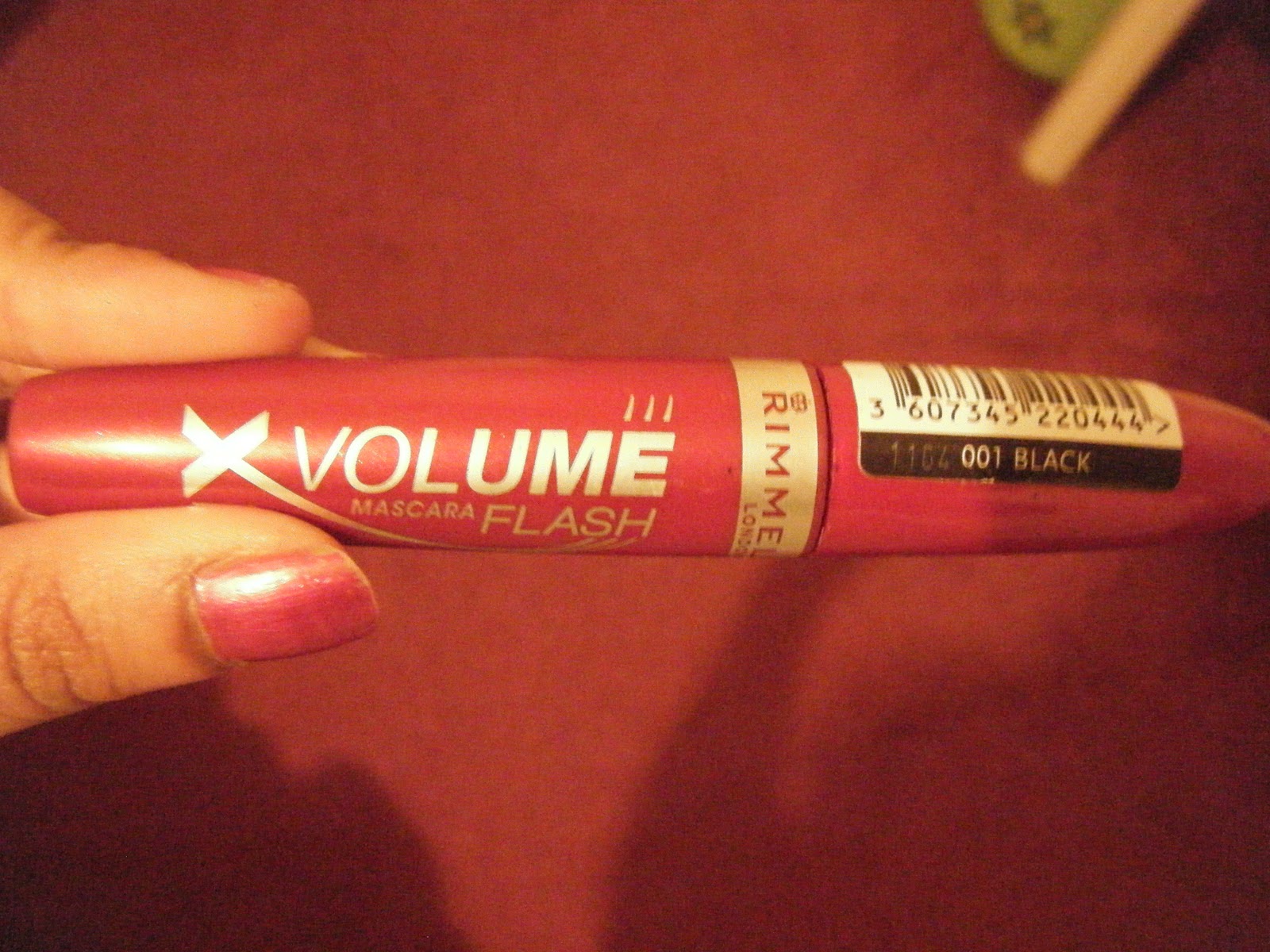
I also tried different techniques using make-up to create an bruise. I used different eye shadows to create the effect shown in the picture below and have discovered that a red/brown coloured lipstick provides a nice subtle sheen to the bruise, emphasising it even more.

Other Make-up
Girls Make-up : Bed Scene
  • Clear Mascara
  • Lip Balm
  • Minimal Foundation to cover blemishes (If needed)


Main Girl's Make-up : Montage Scene
  • Blusher
  • Lipstick/Gloss to draw attention to the lips
  • Black Mascara to define eyes and bring out the eye colour
  • Eye-liner (Optional)
  • Foundation (If needed)


*** Upon actually filming the death scene, we decided it would be more effective to simply use a large amount of fake blood, rather than scars or bruises etc, scattered on the pavement where the male character dies. -Tosin

Post by Kulsuma/Shahnaz

Thursday, 10 November 2011

GENRE THEMES: Sound

SOUND IDEAS

Considering the feedback we received concerning the non-diegetic sound of our film opening, we have researched similar themed romance films which make use of a particular type of music for each individual event or turn in the plot, how we could adapt how they use it and the effect it has.

Examples:


This song would be suitable for the flashback scene of our film opening because it is gentle but upbeat at the same time and this could reflect the bittersweet memories our character has in her dream. This sound track also gives me a sense of nostalgia and this would reflect the reminiscent theme of the flashback.


I feel that this song would be suitable for the flashback in our film opening because personally I sense a feeling of nostalgia in this piece and is of a very reflective tone and I think that this would compliment the whole point of a flashback very well in this segment of the clip, the flashback. It should be muffled at first then the sound should increase when the flashback in her dream starts.


This song is that of just an instrumental and the slow paced but upbeat element to it makes it ideal for a background song for the flashback of the happy moments in the main character in our film opening's dream. It is calm yet reflects the serenity of a good and loving relationship.


I think this song would be ideal for the part of the flashback where the boy in our main character's life dies. The song is morose and quite dramatic to reflect the sudden change that happens in her life and how that this could mean a big change for her. The sadness of the music reflects the pain our main character feels towards this incident.


This piece of acoustic music would be ideal for our flashback in our film opening. It is calm and light hearted reflecting the feeling of love and because of this reflection I feel that this style of music would be appropriate for our film opening.


As a group we have come to the decision of using acoustic music in our flashback and the soft tones of the guitar creates a great impact in showing how something so gentle can be very effective in the subtlest way. 


POSTED BY SHAHNAZ

Tuesday, 8 November 2011

HISTORY OF HOMOSEXUALITY: General/Film

History of Homosexuality
General social attitudes towards same-sex relationships have varied over time and place. Homosexuality was seen as a psychiatric disorder for many years, although the studies for this theory were later found to be flawed.
 In 1973 homosexuality was declassified as a mental illness in the UK. In 1986 all references to homosexuality as a psychiatric disorder were removed from the Diagnostic and Statistical Manual of Mental Disorders (DSM) of the American Psychiatric Association.
The early years of Hollywood, from the 1890s to the 1930s homosexuality was rarely depicted on the screen. When it did appear, it was there as something to laugh at, ‘sure-fire source of humour, object of ridicule’, or something to pity, or even something to fear in some cases. ‘Hollywood taught straight people what to think about gay people... and gay people what to think about themselves in a sense’

It was also in this time a character of the what Hollywood called the ‘sissy’ was popular, such a character was a source of amusement and reassurance for the audience. The sissy was not seen as a threatening representation of homosexuality because ‘he occupied a middle ground between masculinity and femininity.’
From the 1930s to the 1950s, religious and women’s groups criticized Hollywood films for contributing to immorality. As a result, the industry introduced a self-censorship code that affected the portrayal of homosexuality. During these years, films could not feature openly homosexual characters—so homosexuality was implied through a character’s mannerisms and behaviour.
In the 1960s and 1970s,  the event of the women’s movement and the gay rights movement began. While gays and lesbians were becoming more visible and vocal in public life, their representation in films was becoming even more homophobic. At this time, gay characters were often represented as dangerous, violent, or murderous.

It was only in the mid '80s a change hit American theatres, foreign films with gay male protagonists and clear depictions of gay male sexuality began filling theatres across America, getting good reviews and doing well at the box office.
Since the 1990s, Hollywood has improved its portrayal of gay and lesbian characters. But despite these advances, critics say that ‘the industry is still too cautious in its portrayals of gay themes, characters, and experiences.’ Hollywood films are designed to appeal to as large an audience as possible; and producers fear that focusing on gay and lesbian themes risks offending a large portion of the audience, as well as potential investors.

Examples of early movies lesbian, gay or transgender related movies:
  • Lot in Sodom (1993) The movie uses experimental techniques, Avant-Garde imagery and strong allusions to sexuality, especially homosexuality.
  • A Florida Enchantment (1914)
  • Go Fish (1994 American lesbian-themed independent drama film that tells the story of the interrelationships of a small group of lesbian friends in Chicago. Includes a number of discussions on lesbian issues, dream sequences, commentary that breaks the fourth wall.
  • My Beautiful Laundrette (1985)
  • Philadelphia (1993) American drama film that was one of the first mainstream Hollywood films to acknowledge HIV/AIDS, homosexuality and homophobia.
  • The Children's Hour (1961)  The film is based on the play The Children's Hour. Audrey Hepburn and Shirley MacLaine play school teachers falsely accused of having lesbian relationship; one of them realizes that she is in love with the other.
    Desert Hearts (1985) lesbian-themed romantic drama film.
  • The Leather Boys (1964) British drama film about the rocker subculture in London featuring a gay motorcyclist. This film is notable as an early example of a film that violated the Hollywood production code, yet was still shown in the United States, as well as an important film in the genre of gay cinema.
By Tosin